
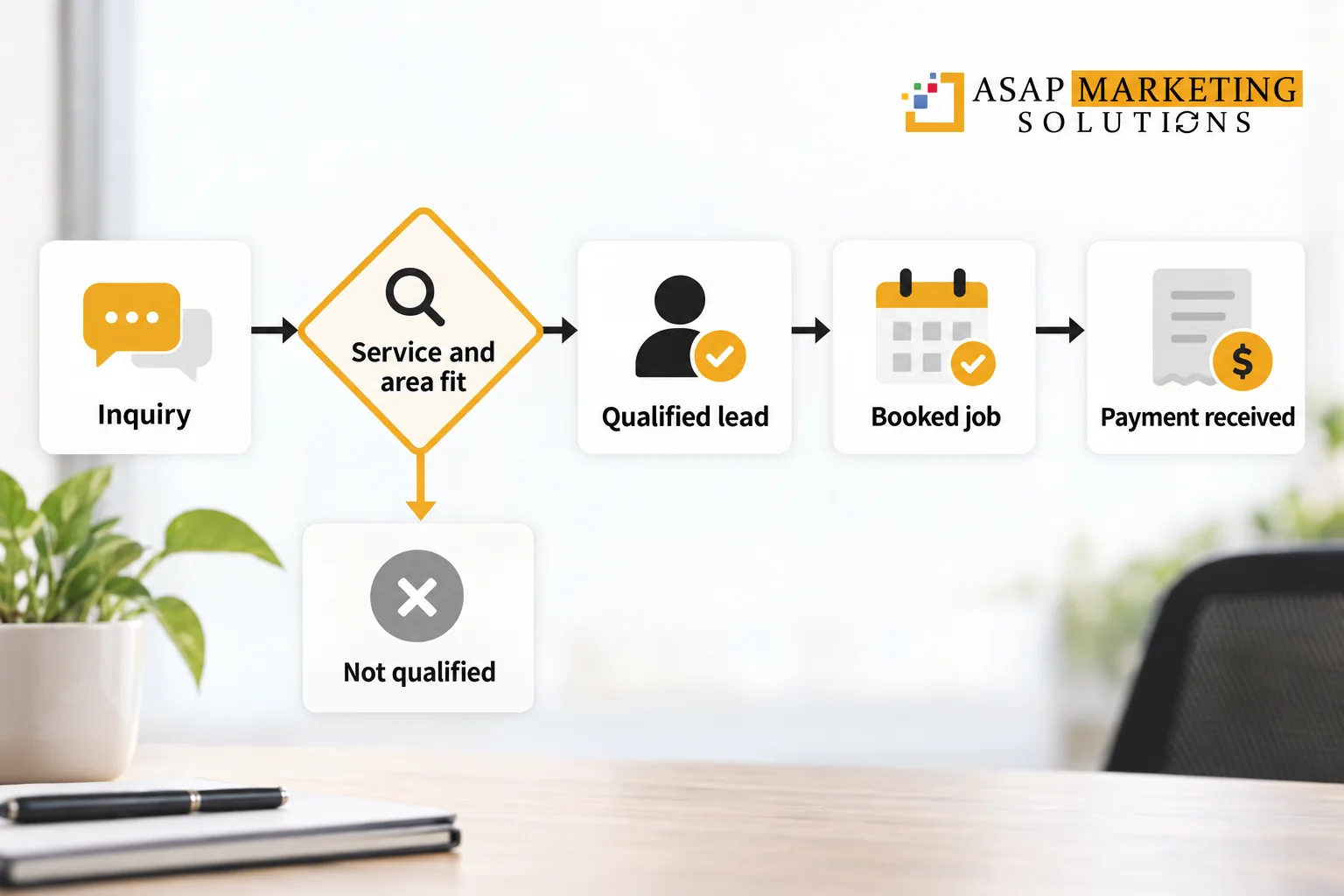
The local service marketing metrics worth tracking are unique leads, qualified leads, booked jobs, cost per qualified lead, and revenue by source. Keep calls, forms, and Google Business Profile activity visible, but don't count every click as a customer. Match each inquiry to your job records so you can see which marketing brings work you can serve.

Define a qualified lead before comparing sources
For this scorecard, a lead is one distinct job request. A second call about that request isn't another lead. A new request from a past customer can be a lead, but label it as repeat business so it doesn't look like a newly won customer.
A qualified lead is a real service request that fits the work you offer and the area you serve. Use that rule across channels, with any extra requirements your business needs.
Keep spam, sales pitches, and requests outside your area out of that qualified count. An appointment change for an existing job isn't a new opportunity.
Build a local service marketing metrics scorecard
Keep the scorecard organized by source or campaign. Clicks and visits can help explain a change, but they aren't the final result. Your main report needs lead counts, a booking rate, a cost, and a dollar outcome.
| Metric | Counting rule |
|---|---|
| Unique leads | Distinct job requests after repeat contacts are removed |
| Qualified leads | Leads that meet your service and area rules |
| Cost per qualified lead | Channel cost divided by qualified leads |
| Booked jobs | Scheduled jobs linked to their lead source |
| Booking rate | Qualified leads that book divided by all qualified leads, multiplied by 100 |
| Collected revenue by source | Payments received for jobs tied to each source |
Count ad spend and any assigned marketing fees the same way for each channel. If the report uses ad spend alone, label the cost that way.
Keep profile activity separate from website visits
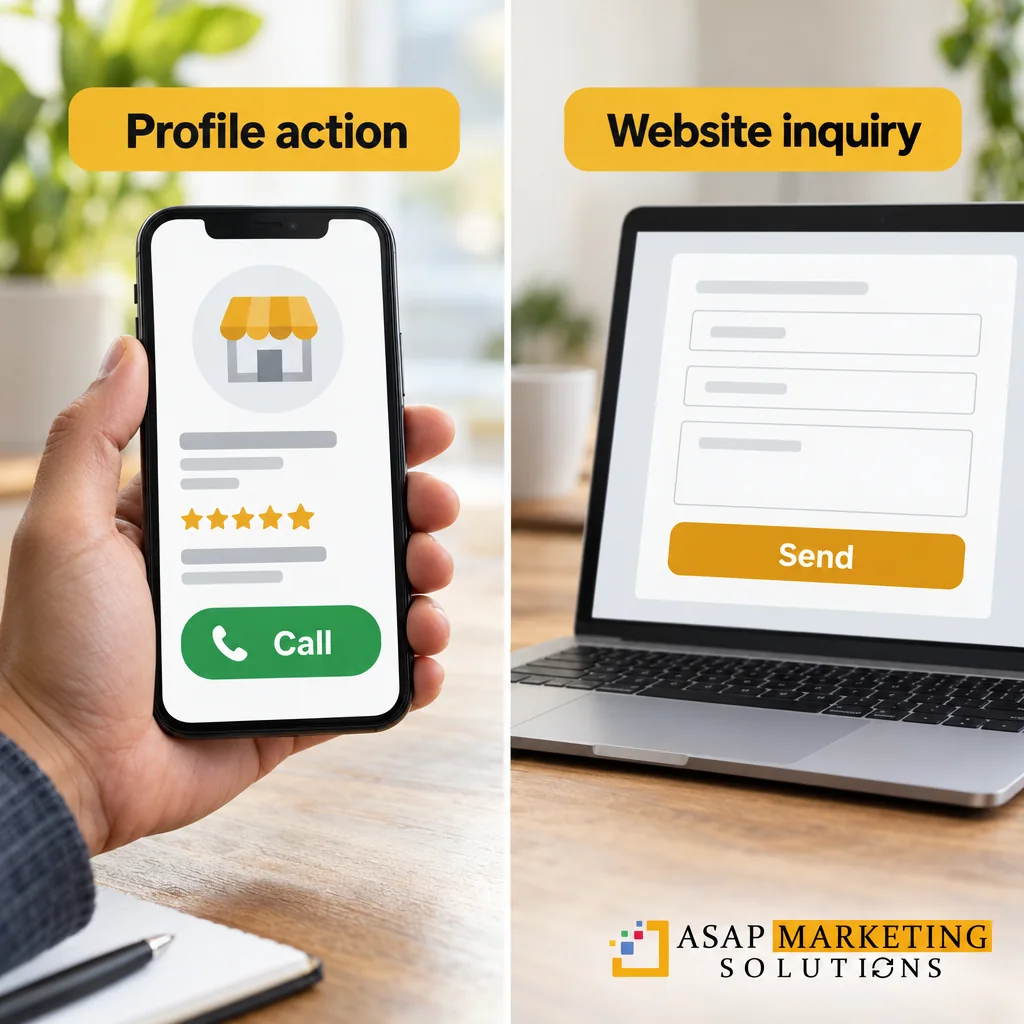
For a Houston-area contractor, a customer can call from a Google Business Profile without visiting the website. Google Business Profile Help lists calls, website clicks, and direction requests in profile performance. These actions show interest, but they aren't confirmed bookings. Keep them separate from website sessions, then connect actual inquiries to your lead records. Don't add a profile website click and the later form submission as two leads. If customers don't visit a shop, keep direction requests out of your main lead total. The useful question is whether an action became a service request you could handle.
Connect each inquiry to a job record
Before using the scorecard to judge campaigns, put these pieces in place.
-
Use campaign tags on links you control. These are labels added to a link so reporting tools can identify its source and campaign. Keep names consistent so the same campaign doesn't appear under several spellings.
-
Track the form that brings service requests. In GA4, a key event is an action marked as important. Google Analytics Help recommends creating an event for the specific form that matters rather than relying only on generic form tracking. Test a successful submission and check that it appears once in the report.
-
Set up call tracking that fits the channel. Google Ads Help describes tracking calls from ads and calls to a website number after an ad click. Several methods require a Google forwarding number. A minimum call length can filter what counts as a conversion, but length alone doesn't prove the caller needs your service.
-
Keep the source, campaign when known, service requested, lead status, booking date, and payment status in one customer record or job log. Include phone, form, chat, and text inquiries there. Leave missing sources marked unknown rather than guessing.
Review gaps before moving the budget
Once a month, match the marketing lead list to your customer records or job schedule. Compare leads from the same starting period. A job paid this month may have begun as last month's inquiry. Keep later outcomes attached to the original lead so short reporting windows don't distort the booking rate.
If inquiries rise but qualified leads don't, review service and area fit. If qualified leads rise but bookings don't, check missed calls, follow-up, and appointment availability before blaming the campaign. If bookings rise but collected revenue doesn't, look at cancellations, unfinished jobs, and unpaid invoices.
Use those gaps to choose what to fix next. More traffic won't solve every problem between the first inquiry and the final payment. Collected revenue isn't profit, either. Materials, labor, overhead, and marketing costs still affect what you keep.
Questions about reading the report
For marketing support for your service business, contact Houston-based ASAP Marketing Solution at (832) 737-2752 about lead generation, local SEO, PPC, or web design. Have your current marketing report and job records ready to discuss what you need to measure.